Concrete is one of the most durable building materials available, but even the strongest slabs can develop cracks over time. Weather changes, heavy loads, and natural settling all contribute to wear and tear. The experts at J and S Concrete, a trusted concrete service provider in the Peterborough and Bancroft regions, share professional insights on how to repair cracked concrete effectively and prevent future damage. Visit our website for more information.
Understanding Why Concrete Cracks
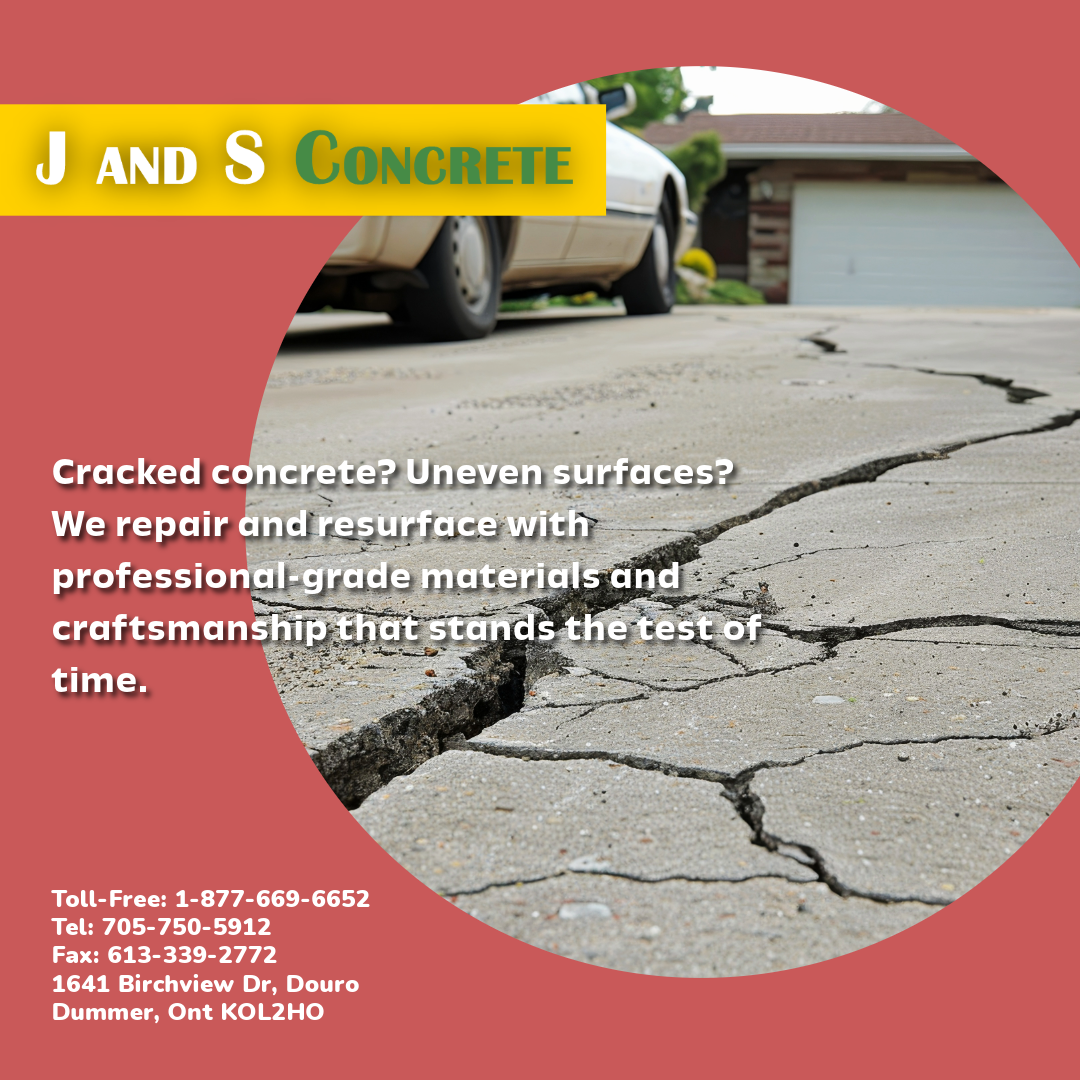 Before you can repair cracked concrete, it’s important to understand why the damage occurs in the first place. Concrete is strong, but it isn’t immune to environmental stress. According to J and S Concrete, who have served the Peterborough and Bancroft areas for many years with unmatched customer service and workmanship, proper diagnosis is the first step toward long-lasting repairs.
Common Causes of Concrete Cracks
Concrete cracks for a variety of reasons, and identifying the cause helps determine the best repair method. One of the most common causes is shrinkage during the curing process. As concrete dries, it naturally contracts, and without proper control joints, cracks can form. Another frequent cause is freeze-thaw cycles, especially in Ontario’s climate, where water seeps into small pores and expands when frozen. Heavy loads, such as vehicles or equipment, can also stress the slab beyond its capacity. Finally, poor installation practices—such as inadequate reinforcement or improper mixing—can lead to premature cracking.
Types of Cracks You May Encounter
Not all cracks are the same, and understanding the type helps determine whether a simple patch will suffice or if a more extensive repair is needed. Hairline cracks are thin and typically cosmetic, but they can worsen if ignored. Structural cracks, on the other hand, are wider and may indicate underlying issues such as soil movement or improper base preparation. Expansion cracks occur when concrete slabs push against each other due to temperature changes. Each type requires a different approach, and the experts at J and S Concrete emphasize the importance of proper assessment before beginning any repair work.
How to Repair Cracked Concrete Like a Professional
Once you understand the cause and type of crack, you can choose the right repair method. J and S Concrete’s long-standing reputation for quality workmanship is built on attention to detail and proper technique, and these same principles apply when repairing concrete surfaces.
Step 1: Clean and Prepare the Area
The first step in any concrete repair is thorough cleaning. Dirt, debris, and loose concrete must be removed to ensure the repair material adheres properly. Use a wire brush or pressure washer to clean the crack, and allow the area to dry completely. For deeper cracks, a chisel may be needed to widen the base slightly, creating a stronger bonding surface. Proper preparation is essential for a long-lasting repair, and skipping this step can lead to premature failure.
Step 2: Choose the Right Repair Material
There are several types of concrete repair materials available, and selecting the right one depends on the size and severity of the crack. For small hairline cracks, a liquid crack filler or concrete caulk works well. These products penetrate deep into the crack and provide a flexible seal. For larger cracks, a patching compound or epoxy filler may be required. These materials are stronger and more durable, making them ideal for structural repairs. Always follow the manufacturer’s instructions and choose products designed for exterior use in Ontario’s climate.
Step 3: Apply the Repair Material Correctly
Once the crack is clean and the appropriate material is selected, it’s time to apply the repair. For caulks and liquid fillers, squeeze the product directly into the crack and smooth it with a putty knife. For patching compounds, mix the material according to the instructions and press it firmly into the crack using a trowel. Be sure to overfill slightly, as the material may shrink as it cures. Smooth the surface to match the surrounding concrete, and allow adequate drying time before walking or driving on the area.
Step 4: Seal the Surface for Long-Term Protection
After the repair has fully cured, sealing the concrete is an important final step. A high-quality concrete sealer protects the surface from moisture, chemicals, and freeze-thaw damage. This is especially important in regions like Peterborough and Bancroft, where seasonal weather changes can be harsh. Sealing not only extends the life of the repair but also enhances the overall appearance of the concrete. J and S Concrete emphasizes the importance of routine maintenance to keep surfaces looking their best year after year.
Preventing Future Concrete Cracks
Repairing cracks is important, but preventing them is even better. With decades of experience serving residential and commercial clients, J and S Concrete understands the value of proactive care. Their commitment to quality and attention to detail has earned them a loyal customer base that appreciates long-lasting results.
Maintain Proper Drainage
Water is one of concrete’s biggest enemies. Poor drainage can cause water to pool around slabs, leading to erosion, freeze-thaw damage, and cracking. Ensure that gutters, downspouts, and landscaping direct water away from concrete surfaces. If necessary, consider installing drainage channels or grading the surrounding area to improve water flow. Proper drainage not only prevents cracks but also protects the foundation of your home or business.
Use Control Joints and Reinforcement
Control joints are intentional cuts in concrete that allow it to expand and contract without cracking. If you’re installing new concrete, make sure control joints are placed at appropriate intervals. Reinforcement, such as rebar or wire mesh, also helps strengthen the slab and reduce the risk of cracking. These techniques are standard practice for professionals like J and S Concrete, who prioritize durability and long-term performance in every project.
Schedule Routine Inspections
Even well-maintained concrete can develop minor issues over time. Scheduling routine inspections allows you to catch small cracks before they become major problems. Look for signs of wear, such as discoloration, surface flaking, or uneven settling. Addressing these issues early can save time and money in the long run. J and S Concrete’s customers appreciate their personalized service and attention to detail, which keeps them coming back whenever a new issue arises.
Concrete is a durable and reliable material, but it still requires proper care to stay in top condition. By understanding the causes of cracks, using the right repair techniques, and taking steps to prevent future damage, you can extend the life of your concrete surfaces. For more expert advice or to explore professional concrete services, visit our website for more information.
Visit our website for more information: J and S Concrete.